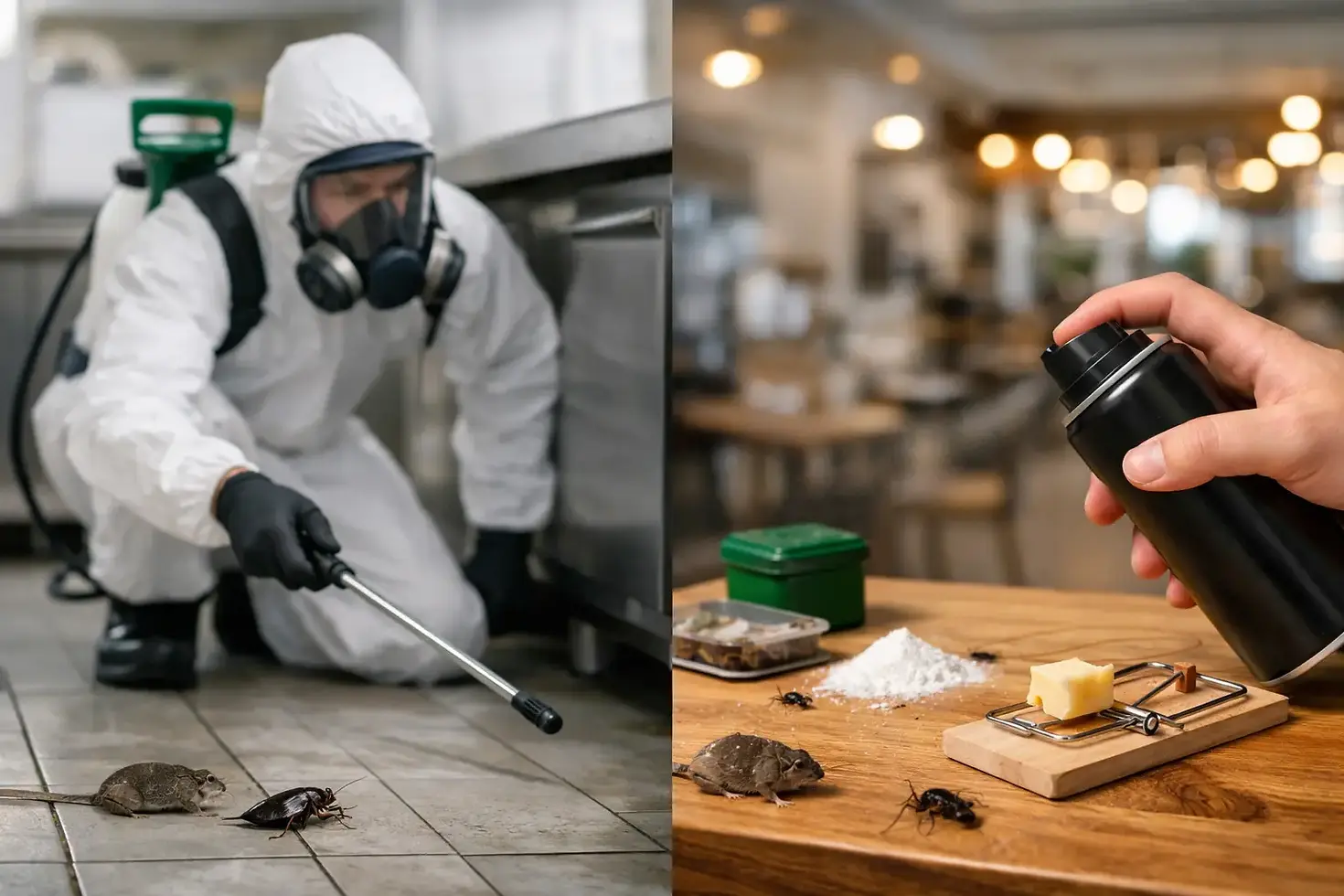
Restaurant Pest Control Versus DIY: What Works?

A single cockroach near the register, a fruit fly around a guest’s drink, or rodent droppings behind dry storage can become much more than a maintenance issue. Restaurant pest control versus DIY is a decision about food safety, staff confidence, health inspection readiness, and the reputation you have worked hard to build.
For a small, isolated issue, a careful do-it-yourself response may help. But restaurants create constant access to food, water, warmth, and hiding places. In busy Los Angeles and Orange County kitchens, pests can move quickly between neighboring suites, delivery areas, dumpsters, drains, and storage rooms. The right choice depends on what you are seeing, where it is happening, and whether you can solve the source rather than only remove what is visible.
When DIY Pest Control Can Make Sense
DIY efforts are not always the wrong first step. A restaurant that notices a few fruit flies near a bar drain, for example, may be able to reduce activity by cleaning organic buildup, emptying trash more often, drying wet areas, and checking that floor drains are properly maintained. Likewise, sealing a small gap around a utility line or replacing a worn door sweep is a smart preventive task.
The strongest DIY work is sanitation and exclusion, not spraying. Daily cleaning beneath equipment, storing food in sealed containers, rotating inventory, repairing leaks, and keeping exterior waste areas orderly all make the building less attractive to pests. These habits support any treatment plan, whether you manage it internally or work with a professional.
DIY has limits, though. Store-bought products can be used incorrectly, placed in the wrong area, or applied without addressing the pest’s nesting site. A spray may kill the insect that crosses the floor while leaving an active cockroach population behind the wall, under equipment, or in a shared plumbing chase.
Restaurant Pest Control Versus DIY: The Real Differences
The difference is not simply professional products versus retail products. It is the difference between reacting to sightings and managing the conditions that allow an infestation to continue.
Cost: The Cheapest Option Can Become Expensive
DIY supplies often look less expensive at checkout. Traps, bait stations, drain treatments, and sprays may cost less than a service visit, especially when the problem appears minor. For one-off prevention tasks, that can be reasonable.
But the financial picture changes when pest activity returns. Repeated product purchases, wasted food, emergency cleaning, staff time, poor online reviews, and potential disruption to service can cost far more than a planned treatment program. Rodents that chew wiring or contaminate inventory can also create losses that are not obvious on day one.
Professional pest control is an upfront operating expense, but it provides a clearer plan: inspection, targeted treatment, exclusion recommendations, monitoring, and follow-up. A transparent provider should explain what service includes and why it is recommended, rather than pushing a one-size-fits-all package.
Speed: Visible Pests Usually Mean There Is More to Find
A DIY trap can capture one mouse. It cannot tell you whether the mouse entered through an exterior gap, traveled from an adjacent business, or has a nesting area behind equipment. The same is true for cockroaches. Seeing one during daytime hours can point to heavier activity than a restaurant owner realizes.
A trained technician looks beyond the immediate sighting. They inspect likely harborages, identify entry points, assess moisture and food sources, and determine whether activity is isolated or established. That investigation matters because quick relief without source control often leads to repeat problems.
For restaurants, speed also means having a dependable response when an issue appears before a weekend rush, private event, or inspection. Ongoing professional service gives operators a known point of contact instead of starting from scratch during a stressful moment.
Safety and Food-Service Compliance
Restaurants must be especially careful with any pest-control product. Food-preparation surfaces, utensils, storage areas, employee workspaces, and guest areas all require thoughtful handling. Applying too much product or placing it improperly can create unnecessary risk and complicate cleanup.
Professional treatment should be targeted and safety-conscious. Depending on the pest and location, this may include monitoring devices, contained bait placements, crack-and-crevice treatment, drain-focused recommendations, and exclusion work. The goal is to use the least disruptive effective approach while protecting people, food, and operations.
A professional can also provide service documentation that helps restaurant managers track activity, treatments, and recommendations. While every operation should follow applicable local health requirements, organized records and regular monitoring can make pest management easier to demonstrate and manage.
Prevention: The Most Valuable Part of Professional Service
The visible pest is only part of the problem. Restaurants need prevention that accounts for the building, the menu, delivery schedules, waste handling, and surrounding businesses.
A quality program looks for recurring vulnerabilities. Grease and food debris behind cooking equipment, moisture under dish stations, gaps around pipes, overfilled exterior bins, cardboard storage, and poorly sealed back doors can all support pest activity. In multi-tenant properties, the source may not be entirely inside your suite, which makes a broader inspection even more valuable.
Professional monitoring also creates a baseline. If activity rises in a particular area, the restaurant can respond before guests see a problem. That is a much better position than waiting for a complaint, a failed inspection, or an employee to find pests during opening duties.
Pests That Usually Need Professional Attention
Some situations are too high-risk for a DIY-only approach. Cockroaches, rodents, bed bugs in hospitality-adjacent spaces, persistent ants, and recurring flies typically warrant an inspection. These pests can reproduce quickly, move through hidden areas, or return because the actual source was missed.
Cockroaches are especially concerning in food-service environments because they hide in tight, warm spaces around motors, plumbing, and appliances. Rodents require more than setting a few traps. Effective control usually involves locating entry points, removing access to food, placing devices strategically, and monitoring results over time.
Recurring flies deserve attention too. Fruit flies, drain flies, and phorid flies can look similar from a distance but may come from different sources. Treating the wrong source can waste time while the issue continues around drains, beverage stations, trash areas, or moisture-damaged spaces.
If pests are appearing during business hours, staff are seeing them repeatedly, droppings or gnaw marks are present, or you have received a guest complaint, it is time to call for professional help.
A Smarter Approach for Restaurant Owners
The best answer is often not DIY or professional service alone. It is a practical partnership: your team owns daily sanitation and reporting, while a pest control professional handles inspection, targeted treatment, monitoring, and guidance on structural corrections.
Create a simple process for employees. Team members should know to report sightings immediately, avoid using unapproved sprays, clean spills quickly, keep food containers sealed, and flag leaks or door gaps. Managers should review pest activity and service recommendations instead of treating them as a checkbox.
When choosing a provider, look for clear communication, restaurant-specific experience, a safety-first approach, and a plan for follow-up. You should understand what was found, what was treated, what your staff needs to do next, and how the provider will measure improvement. Catch Bugs Pest Control takes this kind of personalized, accountable approach because long-term protection is more valuable than a temporary fix.
Your restaurant should feel clean and controlled to every guest who walks in. Address small prevention tasks early, but do not let a recurring or high-risk pest issue become a larger threat to your operation. A timely inspection can protect your kitchen, your team, and the trust your customers place in you.


Comments